
AUTHOR’S GAB, READER TALK.
A LETTER TO YOU, THE READER, SO THAT YOU CAN FINALLY FIGURE OUT WHAT I’M THINKING.
—————————————
THIS MONTH: Anna Karenina
————————————————–
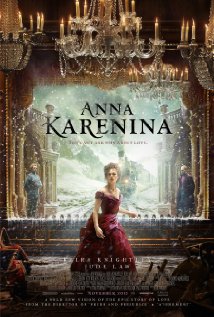
“All happy families are alike; each unhappy family is unhappy in its own way.”
-the first line of Anna Karenina, by Leo Tolstoy
Dear Reader,
If you’ve ever read fiction, the absolute apex of novels everywhere is within the realm of Russian literature. This is particularly true of those books written during the 19th century, Russia’s literary Golden Age. Such novels had a profound affect on fiction everywhere, but ultimately became “more admired than learned from” (Meek). People gape at the very mention of authors like Alexander Pushkin, Mikhail Lermontov, Nikolai Gogol, Fyodor Dostoevsky, and Ivan Turgene and gawk at titles like Eugene Onegin and Fathers and Sons, but ultimately fail to glean much of anything from their content. They casually flip through each weighty title in awe, but shy from reading the book itself. High-schoolers groan when they’re assigned Dostoyevsky’s Crime and Punishment in English class, calling it “hard reading”. Many even complain the novels are too long, an accusation with some truth; comparatively, Lev (Leo) Nikolaevich Tolstoy’s (1828-1910) War and Peace is the world’s eighth longest book, with 1,440 pages.
Nevertheless, for whatever reason, Tolstoy’s Anna Karenina, “still provokes both excitement and respect from readers as diverse as JM Coetzee, Jonathan Franzen and Oprah Winfrey” (Meek). Thus, it has grown in stature over the years to near mythical proportions, causing it to be made into several feature films. The first adaption, a silent film, was released in 1914 by Russian director Vladimir Gardin, and continued to be remade another ten times over the twentieth century. The latest adaption, by Universal Pictures, comes out on September 7, 2012, featuring Keira Knightly as Anna Karenina (leading lady number one) and Alicia Vikander as Kitty Shcherbatskaya (leading lady number two) is equally captivated by fantasy. Director JoeWright, who also directed the recent book-to-movie adaptions of Jane Austen’s Pride and Prejudice and British romance novelist Ian McEwan’s Atonement, explains on the film’s website (http://focusfeatures.com/video/anna_karenina__a_bold_new_vision_of_the_epic_story_of_love) how the Russians, copying the French at the time Anna Karenina was written, were “living their lives as if they were on a stage, (giving him) the idea to set the majority of the film in a theater.”
The allure is simple: at its core, Anna Karenina is basically a nineteenth century Russian soap opera. Completed in 1877, at a tumultuous time in Russian history and in Tolstoy’s own life, it “tells the parallel stories of an adulterous love between a passionate woman (Anna Karenina) and a military officer (Alexi Vronsky), and of an introspective estate owner (Levin)” (The New York Times). It begins with adultery, which spirals into more adultery, complete with dramatic hook-ups and break-ups, and ends with Konstantin Levin, Kitty’s husband, contemplating the meaning of life, all while jabbing at 19th century Russian society. Obviously, sensationalism sells. Go figure.
But, the seven main characters, two Russian noblewomen, Anna and Kitty, as well as their husbands and their lovers, are also concerned with examining Tolstoy’s vision of morality. Like executive producer George Faber of Company Television in Britain said to PBS:
“Anna Karenina isn’t concerned with observing the minutiae of social etiquette, like Jane Austen, nor with righting social injustices, like Dickens. It’s about raw, often uncontrollable passions, emotional and sexual betrayal, mixed-up people with mixed-up lives. It offers no easy solutions or simple moral judgments.” (qtd. in “Anna Karenina”)
This was largely because, in life, Tolstoy himself, as an ENFP Champion Idealist, was equally concerned with virtue. According to Sparknotes, Tolstoy was born into a large and wealthy, landowning, Russian family in 1828 and was orphaned when he was nine years old. Left only with his family’s wealth, Tolstoy became acutely aware of death at a young age, “an idea central to all his great works and especially evident in the strong association of the character of Anna Karenina with mortality” (“Anna Karenina: Context”). Uninterested in his education, Tolstoy “lived aimlessly before joining the army at 23” (The New York Times) as a junker. There, in his spare time, he began composing his memoirs, Childhood (1852), his first published work. He followed this memoir up with a second, Boyhood (1854), as well as a collection of “soldier” stories (The Sevenpool Tales), and eventually published his first novel, The Cossacks, in 1962. It wasn’t until he got out of the military, returned to Russia and married Sofya Andreevna Behrs in 1862 that he began producing his most famous works, including War and Peace and Anna Karenina. After this, Tolstoy suffered a spiritual crisis and became a Christian, greatly impacting the rest of his life. Though he continued to write, producing spiritual novels and short stories such as The Death of Ivan Ilyich (1886), he became a grassroots figure tormented by the conflicting ideologies of his wealth and his spiritual values. He died in 1910 of pneumonia in a train station.
The novel takes place after the Crimean War (1853 – 1856), a war between Russia and Britain during the collapse of the Ottoman Empire. Russia and Britain were in position to pounce on Ottoman territory, and neither was willing to give up ground. The resulting scramble produced a brief but intense conflict between Russia and Britain, aka the Crimean War (“The Crimean War”). For Russia, however, the Crimean war was an expression of its own practical and moral struggle for nationalism, demand for expansion and modernization, eventually culminating in the founding of the Soviet Union. According to the U.S. Library of Congress, because the war coincided with the beginnings of Western globalization, Russia, like the rest of the world, ready for globalization or not, was being funneled through the process of modernization at a breakneck pace. Russians became torn between their traditional culture, developing at its own, slower, pace, and Western, mainstream modernization (“Transformation of Russia in the Nineteenth Century”).
Consequentially, according to Richard Pevear in the introduction to Anna Karenina, the 1870s, when the novel takes place, were a time of ideological upheaval:
“The radical intigentsia had been attacking the ‘institution’ of the family for more than a decade. Newspapers, pamphlets, ideological novel-tracts like N.G. Chernyshevsky’s What is to be Done?, advocated sexual freedom, communal living and the communal raising of children. Questions of women’s education, women’s enfranchisement, the role of women in public life, where hotly debated in the press.” (ix)
In response to all of this, Tolstoy began writing Anna Karenina in 1873, at the age of forty-five. Originally, however, he did not conceive it as a political novel but as a personal one, inspired as he was by Pushkin’s line, ‘The guests arrived at the summer house’ (xi). This idea then eventually evolved into the concept of Anna herself, acquired when a neighbor, Anna Stepanovna Pirogov, threw herself under a train in January 1872 when her lover abandoned her. Even though he often struggled with the various details, such as character development and coming to terms with the fact that Anna’s death was inevitably the punishment for her adultery, the novel evolved smoothly from there, culminating in its publication in 1877.
What eventually gave the novel its kick, however, was the addition of several elements from Tolstoy’s own personal life, including his own struggle with spirituality and morality within Anna and Levin. Most sources also agree that he even heavily based the romance between Kitty and Levin (whom he modeled on himself) on his own relationship with his wife, “down to details such as the forgotten shirt that delays Levin’s wedding” (Sparknotes). Perhaps this is what ultimately keeps the novel from being crushed by the weight of political details and more in tune with the sensational and controversial aspect of Anna’s adultery.
Therefore, this “sensational romantic tragedy of tsarist high society, interspersed with digressions into 19th-century agricultural policy (and) written in a seemingly plain, straightforward style across 900 pages” (Meek) becomes more than sensational, like pieces of other Russian literature. It is thus transformed, not because it wants to be, but, because of its authors’ and its nation’s own intimate personal struggle, embodied in its text. After all, Anna Karenina is not a shallow read like Fifty Shades of Gray, but a deeper read like Pride and Predjudice, full of allusions and hidden meanings. While this certainly does not make it stand out among the other classics, particularly the Russian ones, the fact that Tolstoy did this with a romance novel does. And, a story that’s catchy and deep just makes great, timeless fiction, drawing readers back to Anna Karenina again and again.
To check out the book, go to <http://www.amazon.com/Anna-Karenina-Leo-Tolstoy/dp/0143035002/ref=sr_1_3?ie=UTF8&qid=1346994621&sr=8-3&keywords=Anna+Karenina>. To watch the movie trailer for Wright’s Anna Karenina, go to <http://focusfeatures.com/anna_karenina> and click “Watch the Trailer”. Have a great September, everyone!!! 😀
Sincerely, Your Author,
Jessica McLean
………………………………………………………………………………………………………………………………………
Works Cited:
“10 Classic Russian Novels.” 10 Classic Russian Novels. N.p., n.d. Web. 07 Sept. 2012. <http://russianwomenblog.hotrussianbrides.com/post/10-Classic-Russian-Novels.aspx>.
“Anna Karenina.” PBS. PBS, 2001. Web. 07 Sept. 2012. <http://www.pbs.org/wgbh/masterpiece/anna/index.html>.
“Anna Karenina.” SparkNotes. SparkNotes, n.d. Web. 07 Sept. 2012. <http://www.sparknotes.com/lit/anna/context.html>.
“Anna Karenina.” SparkNotes. SparkNotes, n.d. Web. 07 Sept. 2012. <http://www.sparknotes.com/lit/anna/summary.html>.
“The Crimean War – Episode 1.” YouTube. UKTV, 15 June 2011. Web. 07 Sept. 2012. <http://www.youtube.com/watch?v=Pqik0WDMDco>.
“Leo Tolstoy Biography.” Bio.com. A&E Networks Television, 2012. Web. 07 Sept. 2012. <http://www.biography.com/people/leo-tolstoy-9508518?page=2>.
“Leo Tolstoy.” The New York Times. The New York Times Company, n.d. Web. 07 Sept. 2012. <http://topics.nytimes.com/top/reference/timestopics/people/t/leo_tolstoy/index.html?8qa>.
Meek, James. “James Meek: Rereading Anna Karenina by Leo Tolstoy.” The Guardian. Guardian News and Media, 31 Aug. 2012. Web. 07 Sept. 2012. <http://www.guardian.co.uk/books/2012/aug/31/rereading-anna-karenina-james-meek/print>.
Meek, James. “James Meek: Rereading Anna Karenina by Leo Tolstoy.” The Guardian. Guardian News and Media, 31 Aug. 2012. Web. 07 Sept. 2012. <http://www.guardian.co.uk/books/2012/aug/31/rereading-anna-karenina-james-meek/print>.
“Russia – Transformation of Russia in the Nineteenth Century.” Russia – Transformation of Russia in the Nineteenth Century. US Library of Congress, n.d. Web. 07 Sept. 2012. <http://www.countrystudies.us/russia/6.htm>.
Tolstoy, Leo, Richard Pevear, and Larissa Volokhonsky. Anna Karenina: A Novel in Eight Parts. New York, NY: Penguin, 2002. Print.




 The Rose