
AUTHOR’S GAB, READER TALK.
A LETTER TO YOU, THE READER, SO THAT YOU CAN FINALLY FIGURE OUT WHAT I’M THINKING.
—————————————
THIS MONTH: Trending Famous
————————————————–
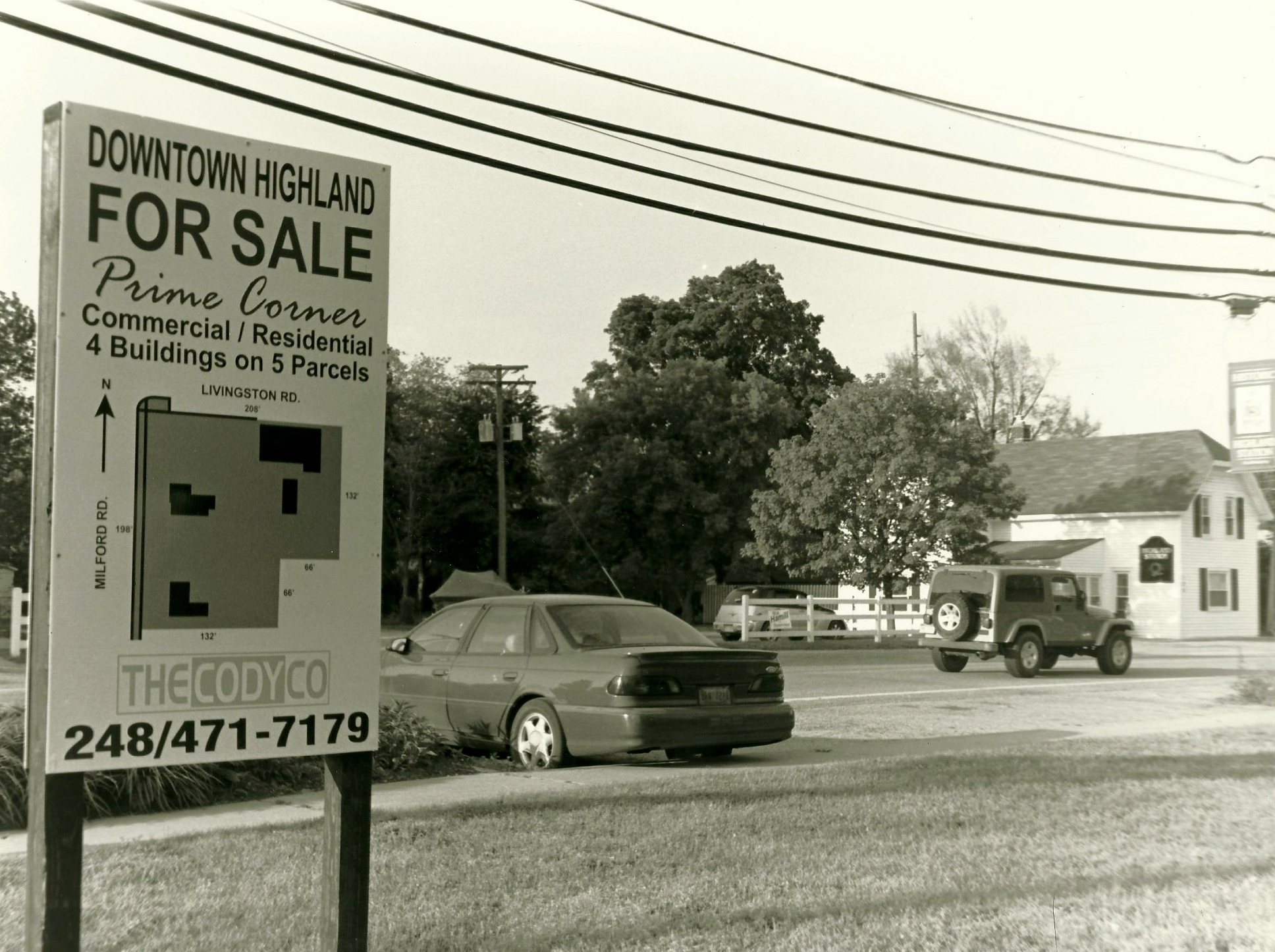
“Whatever your hand finds to do, do it with all your might, for in the grave, where you are going, there is neither working nor planning nor knowledge nor wisdom.” (Ecclesiastes 9:10)
(p.s. I made the photo above.)
Dear Reader,
Fame seems to manifest itself in an obvious trend: one can only truly become famous AFTER death. While living, there is always the potential, the possibility, to alter one’s fate.
In a sense, while living, one still can be ripped from the spotlight, so nobody cares to remember these post-infamous deeds after death. It’s as if everyone is waiting for him or her to slip up, so they must tread lightly to immortalize themselves in society’s memory.
There are thousands of examples.
One such example is Jane Austen. While she was alive, she basically wrote her novels as an unknown figure, criticizing (high) society in secret. It wasn’t until after her death that her family began trying to publish her books; and, with or without her consent, she achieved a high degree of fame post-mortem.
J.D. Salinger may have sympathized. A recluse who wanted nothing to do with fame, “Salinger’s only novel, The Catcher in the Rye, …gradually achieved a status that made him cringe” (Lacayo). He died at age 91 in 2010, happily holed up in his home in Cornish, New Hampshire, grimacing at whatever success he may have achieved in his lifetime.
Other people simply became famous because they died before society was finished with them. Here, examples might include James Dean, Marilyn Monroe, Amy Winehouse, or even Michael Jackson.
Diane Arbus certainly achieved greater fame in death than in life, perhaps simply because society wasn’t finished with her when she died. A photographer in the 1940s (and until her suicide in 1971), she detested success, photographing her personal pain and contempt for the “fakeness” of achievement and wealth. Yet, because her suicide enthralled her work in a shroud of mystery, she became infamous after her death, a fact she might have found revolting had she lived to see it.
Steve Jobs, like Arbus, died before society was finished with him. This past CEO of Apple rationally invented and enhanced computers, overseeing major technological advances such as the Macintosh computer and laptop, the iPod, the iPad and the iPhone. His work even included sofware advances for these systems.
He probably knew he was famous, but what made him “arrogant” was his love for inventing. The public consumed his products because they trusted him to consistently provide the quality he gave them, but also admired his zeal. They sought to immortalize him in his position, even when his health began to fail him in 2003 (“Steve Jobs Biography”). Thus, when Jobs died of cancer in 2011, it was treated as a national tragedy.
But, will Jobs’ memory simmer through the glaring lens of history, much as Albert Einstein, Henry Ford or Thomas Edison did? And, if so, what about him will stick?
This, after all, is the nature of fame: it’s subjective and fleeting, like beauty. One cannot peer through the lens of time and see its future. The pharaohs certainly believed mummifying themselves in the pyramids would guide them to the afterlife and deify them as kings of Egypt to their populace; however, thousands of years later, they have become famous archeological spectacles, rather than the gods and kings they believed themselves to be.
No time is this fact more prevalent than now, because, lately, many famous people have died, and at an incredibly alarming rate. Thus, as the public, it is our responsiblity to speak of them correctly, in accordance with what they desired and achieved during their lifetimes. For it is us, the little famous, who will fatefully determine how their memories will eventually be affixed and preserved in society and, consequentially, time.
Ray Bradbury, for instance, died this week (Grossman). Science-fiction author and poet, he “wrote his more than 500 short stories, novels, plays, and poems on a typewriter” (Goodale) and regularly exposed both himself and critical aspects of humanity in his books and poems. His most notable works include: “Fahrenheit 451” (book), “The Martian Chronicles” (book series), “Something Wicked This Way Comes” (book) and “If Only We Had Taller Been” (poem).
In his lifetime, his wisdom was unquestioned and his works became staples of English classrooms. His major influence, however, mostly came around the 1950s, so how he will be immortalized, even if he will be immortalized, in the minds of the younger American public remains in limbo; however, he will certainly be acknowledged. I, for one, will certainly remember Bradbury as the author who allowed my journalistic abilities to materialize, when I wrote my first article on Meadow Brook Theatre’s “Something Wicked this Way Comes” in October 2011, but how you remember him is strictly up to you. Eventually, these memories, along with the memories of countless others about him, will pile up into a collective opinion about Bradbury, determining his true fame and impact on society.
To me, this really explains why this trend persists: because people finally make up their minds when someone, like Bradbury, dies. It really proves how fame can function on a large or small scale, or bring success or failure to those it leaves behind on its coattails, an essence I have tried to capture in my own work. In the sonnet, “Fame”, for example, The Elephant, an Edinburg cafe, would never have gained much repute if J.K. Rowling had not started writing Harry Potter there. Furthermore, my ex-boyfriend, Jason, later told me how famous I was to him that day, a fact which positively impacted our relationship.
Yet, there is a more critical component to this puzzle: how Bradbury, and others, thought of themselves. Presently, how you remember yourself is most important because it will always affect how others remember you. Admittedly, for example, I find myself disheartened and disenchanted with my writing this month, after working for the Oakland Post this spring did not end on a positive note. In other words, I find myself questioning my own fame among the flurry of my summer school work, something which I think my analogue project for my Photography for Non-Majors class, entitled “For Sale”, adequately reflects. If I give up now, however, I will essentially self-destruct my career and eliminate what fame I have already gained. If I persist, I might find a more satisfactory avenue to what I hope to achieve. That is the power I have.
But, that is also the power each person has: to determine their own fame/memorium before death. Here, the trend can be analyzed from those who are famous and living.
Linsdsey Lohan, for example, will probably not be remembered for her acting after her death, as much as she would probably like to be. While she was, undeniably, an excellent child actress, her drug abuse and numerous prison sentences will undoubtedly make her more of a fallen star than a diva.
Conversely, while ex-President Bill Clinton made many good policies for America during his terms in office, he will most likely be remembered for his scandalous affair with former While House intern Monica Lewinsky. Not only did this lead to Clinton’s consequential impeachment, it also made Lewinsky immediately famous for all the wrong reasons, effectively ruining the rest of her professional and social life (O’Brien). By one small, selfish act, he potentially changed how the public will perceive him (and Lewinsky) forever.
So, as discussed, people most likely suddenly become famous after death in memoriam of the impact of their lives. Yet, how they are remembered is not entirely up to the populace, it’s also up to them. What they are remembered for, however, is constantly in limbo, jarred by what the public views as their weightiest contribution to society. If the affect is viewed as small, then the fame garnered to that individual is comparatively small. Conversely, if the affect is large, then the warranted fame is equally as large. But, in both cases, its the majority opinion which seems to count. So, while Jobs will most likely become immortalized throughout history, there is no telling how he will be remembered. He could, like Lohan, Clinton, and Lewinsky, ultimately stand for one dire event in history, or, if he’s lucky, he will stand out as a great inventor of his time.
A cruel trend, perhaps, but not one which should lead us to despair. Brian Selznick probably said it best in his book, “The Invention of Hugo Cabaret”: ““I like to imagine that the world is one big machine. You know, machines never have any extra parts. They have the exact number and types of parts they need. So I figure if the entire world is a big machine, I have to be here for some reason, too.” (378) And, if this is so, I find myself very thankful that God is its operator, and that I’m not. My life will most likely not be immortalized on a large scale because I have not impacted the world on a large scale like, say, Steve Jobs or Jane Austen have; yet, that is not to say I’m not “famous”. I too wish to make an imprint, hopefully with my creativity. And that, dear friends, is what matters.
Until next time. 🙂
Sincerely, Your Author,
Jessica A. McLean
……………………………………………………………………………………………………………………………………………………………………….
Works Cited
Goodale, Gloria. “The Christian Science Monitor.” The Christian Science Monitor. The Christian Science Monitor, 06 June 2012. Web. 10 June 2012. <http://www.csmonitor.com/The-Culture/2012/0606/Ray-Bradbury-a-passionate-sci-fi-writer-with-the-gifts-of-a-painter>.
Grossman, Lev. “R.I.P. Ray Bradbury: He Jumped Off Cliffs and Never Hit the Ground.” TIME.com. Time, 6 June 2012. Web. 10 June 2012. <http://entertainment.time.com/2012/06/06/r-i-p-ray-bradbury-he-jumped-off-cliffs-and-never-hit-the-ground/>.
Lacayo, Richard. “Time.” Time. Time, 29 Jan. 2010. Web. 10 June 2012. <http://www.time.com/time/magazine/article/0%2C9171%2C1960265%2C00.html>.
O’Brien, Mike. “‘A Social Pariah’: How Lonely Monica Lewinsky Has Failed to Find Happiness… and Is STILL the Butt of Lewd Clinton Jokes.” Mail Online. Associated Newspapers Ltd., 7 Sept. 2011. Web. 9 June 2012. <http://www.dailymail.co.uk/news/article-2034697/Lonely-Monica-Lewinsky-trying-play-Bill-Clinton-affair.html>.
Selznick, Brian. The Invention of Hugo Cabret: A Novel in Words and Pictures. New York: Scholastic, 2007. Print.
“Steve Jobs Biography.” The Biography Channel Website. A&E Networks Television, n.d. Web. 10 June 2012. <http://www.biography.com/people/steve-jobs-9354805>.






 The Rose