
Author’s Gab, Reader Talk.
A letter to you, the reader, so that you can finally figure out what I’m thinking.
—————————————
This Month: Write collaboratively
————————————————–
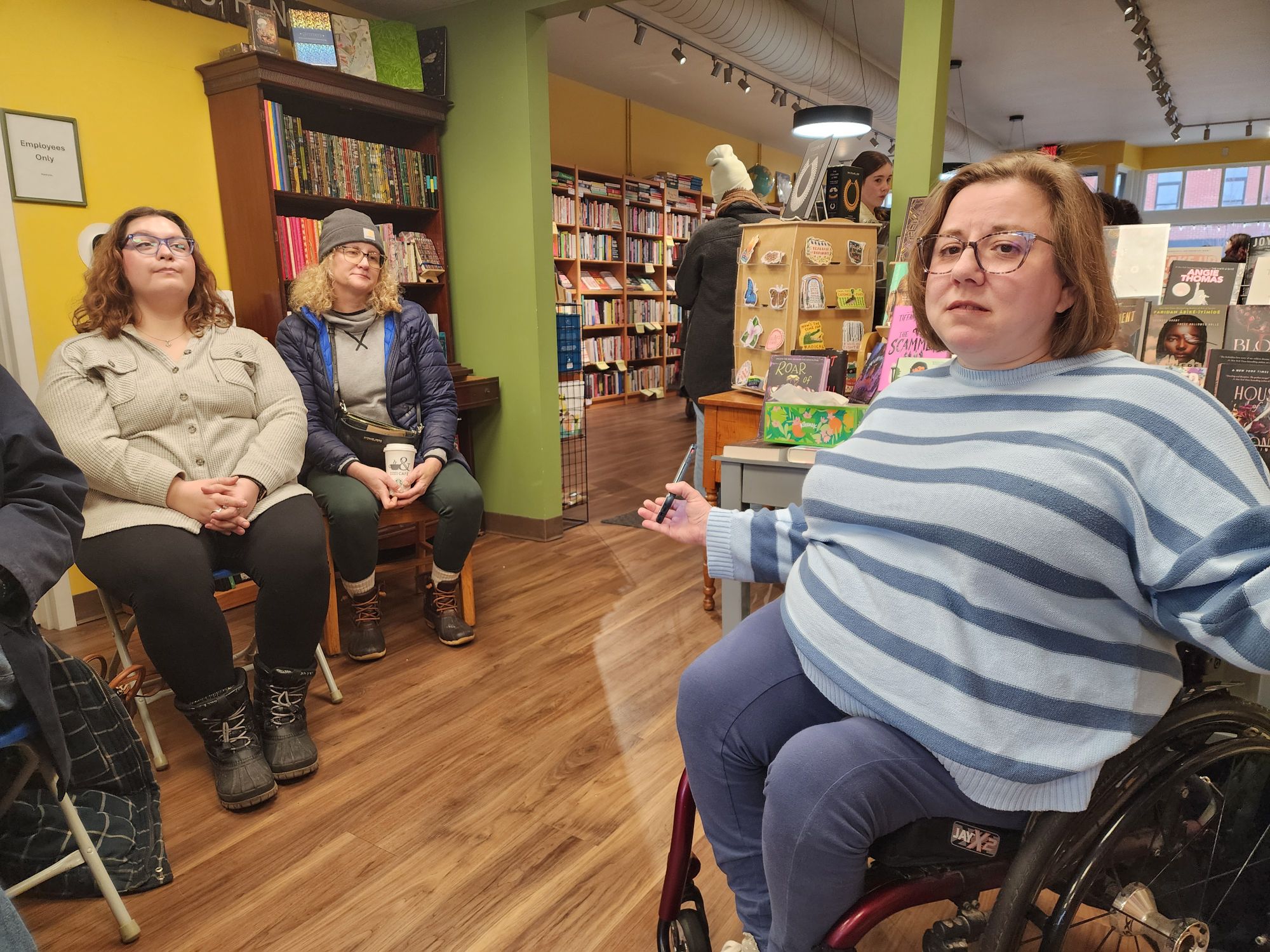
“I’m worried about you,” I said, tell me what I an do to help.”
Her smile faded. “What makes you think I need your help?”
“I’m not rich,” I said. “But, I have some money. Tell me what it is you need.”
She thought for a moment. “I could use an electrolysis treatment.”
“Be serious.”
“I am serious. If a woman looks good, she feels good.”
— Janette Walls, on page 5 of her memoir, “The Glass Castle”
Dear Readers,
A little while ago, someone at work told me I needed to join a writing group. I was working on writing my novel, and I had just finished bouncing an idea I had off of AI. They told me not to use AI for my feedback, or them for that matter, and find a group of writers to share my work with. “Where can I find that?”, I asked.
“Oh, Meetup, Facebook. They’re out there.”
I felt certain they were, but I didn’t know where I would find someone like that. But then, I came to a point where I did actually need feedback on my poetry. Five poems were stuck in editing, for various reasons. And, I could see no getting them out of the draft phase without asking someone what they thought and if my assumptions were correct. That’s about the point I realized I could no longer write alone. I needed another writer (preferably also a poet) to help me.
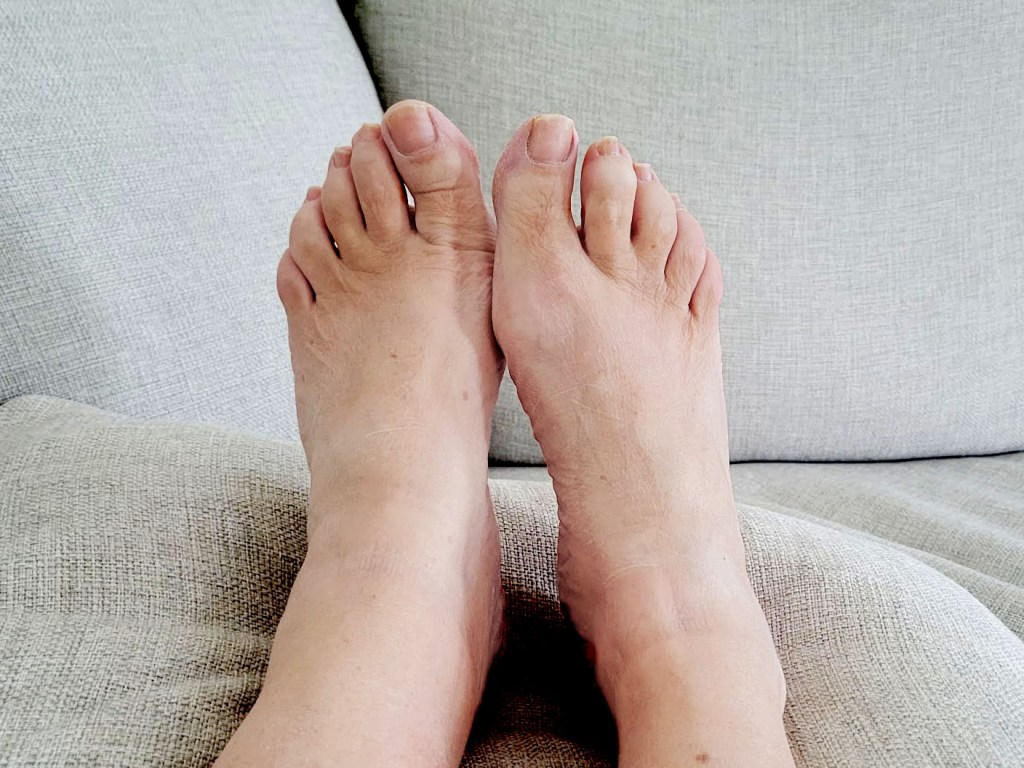
So, hungry for some fellow creative thinkers, I found an open mic, hosted by Isabella J. Mansfield, a local poet here in Detroit, who wrote “lemon”, her poetry collection. I drove down to Two Dandelions Bookshop in the middle of that historic snowstorm we had this winter, and I began to share my poems. The feedback I received helped. Isabella and I then had coffee to finish what we started with that feedback. And, that time was so, so good, untradeable. It is perhaps the reason I was able to publish “Political violence” and “Rubbing my mother’s feet” at the beginning of February. I went back later in the month to the same writing group and received feedback on a prose poem I have in the works during the workshop phase and then was able to read some of my finished work, including “Bike for sale”, at the open mic.
Friends, fellow writers, this month, I have a charge for you: don’t write alone. Write collaboratively. Write together. Write as if you are giving yourself permission to share things with your colleagues as much as you are giving yourself permission to share your writing with yourself. Don’t hold back, for it is going to make your writing better.
I say this as someone who often writes alone and resents getting help from an actual person sometimes. If I can do it myself, great. But, what if I can’t?
I recently was hunting for the page number for the quote I put at the bottom of “Rubbing my mother’s feet”. I had found the quote online, which said it was from Karen Kingsbury’s book, “Even Now”. But, the devil be in the details, because I couldn’t find that page number anywhere on the internet. Frustrated, I bought the book, which came as a used copy, even if I bought it new. I did my best to speed read each page looking for the quote, because who has time to read the whole thing? Even then, I couldn’t find the quote I was looking for. It took me asking AI for the page number and it giving me the wrong page number but the right context, for me to find the quote. Page 271, at the bottom of the page! Ha! Found it.
But, in the middle of my misdirection, AI actually recommended another book it thought the quote was in: “The Glass Castle” by Jeanette Walls. Furtively, I bought the book and started to read, hoping to find my missing page number. Instead, I found another quote that made me chuckle.
In the prologue of the book, Walls, who is a journalist like myself, begins her memoir by telling about how she saw her mom, homeless, rooting through a dumpster. She was headed to a party and had seen her mother out the taxi cab window. Embarrassed, she asked the cab to take her home and contacted her mom’s friend to see if they could ask Walls’ mom to meet her for lunch. At lunch, Walls asked her mom if she needed any help, to which she knew her mom would reply with asking for something silly. She says:
What could I do? I’d tried to help them coutless times, but Dad would insist they didn’t need anything, and Mom would ask for something silly, like a perfume atomizer or a membership in a health club. They said they were living the way they wanted to.
— Walls, on page 4 of her memoir “The Glass Castle”
And, sure enough, that is exactly what happened when she tried (ergo the quote):
“I’m worried about you,” I said, tell me what I an do to help.”
Her smile faded. “What makes you think I need your help?”
“I’m not rich,” I said. “But, I have some money. Tell me what it is you need.”
She thought for a moment. “I could use an electrolysis treatment.”
“Be serious.”
“I am serious. If a woman looks good, she feels good.”— Walls, on page 5 of her memoir, “The Glass Castle”
Hilarious, right? But, maybe no so, when we think about what it means in the context of our charge this month. Walls’ mother is ducking the subject of her needing help, even refusing it, by asking for something frivolous. And, by doing that, she is not getting the help she needs. Instead, she is choosing to remain alone and take the entire burden of her situation on herself, to not burden her daughter.
If we do this with writing, however, we often choose to isolate ourselves and carry our own writing alone. This creates a vacuum where our writing exists only unto ourselves and is not shared with others. By doing so, we also trap the questions or thoughts we have about each poem inside ourselves. We don’t seek the help we need to make great poetry. Instead, we ask others for something frivolous. We only put what we think is the most finished out there, ask people to read it and don’t ask them to comment.
The result is something akin to a funhouse mirror: our poetry becomes distorted. It still exists, but it’s nothing great, nothing we are truly proud of. It looks a little wonky, because we haven’t gotten the feedback we need. And, we discard it, because we think we look a little weird. It’s nothing serious. In fact, we may even see it as laughable.
Writing collaboratively with a group of other writers like ourselves clears up the confusion. Even showing your stuff to a Joe Smoe on the street and asking what they think will get you a reaction, which is sometimes valuable information. But, most of them don’t know writing like we do, so we have to dig a little deeper, go a bit more radical. Put that writing group on our calendars and drive an hour to show up, all because that sweet feedback from likeminded creatives is just so worth it and gets whatever your working on out of that lonely vacuum. Even if it’s brief, you get the help you need.
After that latest writing group, I had dinner with my folks. I told my dad, “Your daughter is a poetry nut, so she went and hung out with other poetry nuts tonight. As a poetry nut, don’t you think there are some things she knows about poetry you don’t?”
“Yes,” he said. “As it should be.”
I will take that a step further and say that those other poetry nuts know things about poetry I don’t. For example, one such poet in the Brighton writing group, Dan Carleton, is 78, has four published books and is a retired professor from the University of Illinois Urbana. You just can’t beat his experience. Another poet sitting next to me in late February was creating graphics of his poetry and fiction on his tablet. Yet another recounted her experience as a member of the LGBTQ+ community. In January, another recounted her experience of averting tragedy with her husband.
All these added to the collective experience, making collaboration and feedback about our poetry possible. Nuts need other nuts to be a little nutty, is what I think I’m saying. It’s what made our poetry possible. Or, to put it more formally, collaboration begets innovation, as Harvard professor Linda Hill said in her TED talk:
“When many of us think about innovation, though, we think about an Einstein having an “Aha!” moment. But we all know that’s a myth. Innovation is not about solo genius, it’s about collective genius… Innovation is a journey. It’s a type of collaborative problem solving usually among people who have different expertise and different points of view.”
— Hill in her talk for TEDxCambridge, recorded September 2014
Maybe I should stop there. In fact, I totally could stop there. I mean, you went to writing group. You got the help you needed. You didn’t shy away from reading. You put it all out there. You’re good.
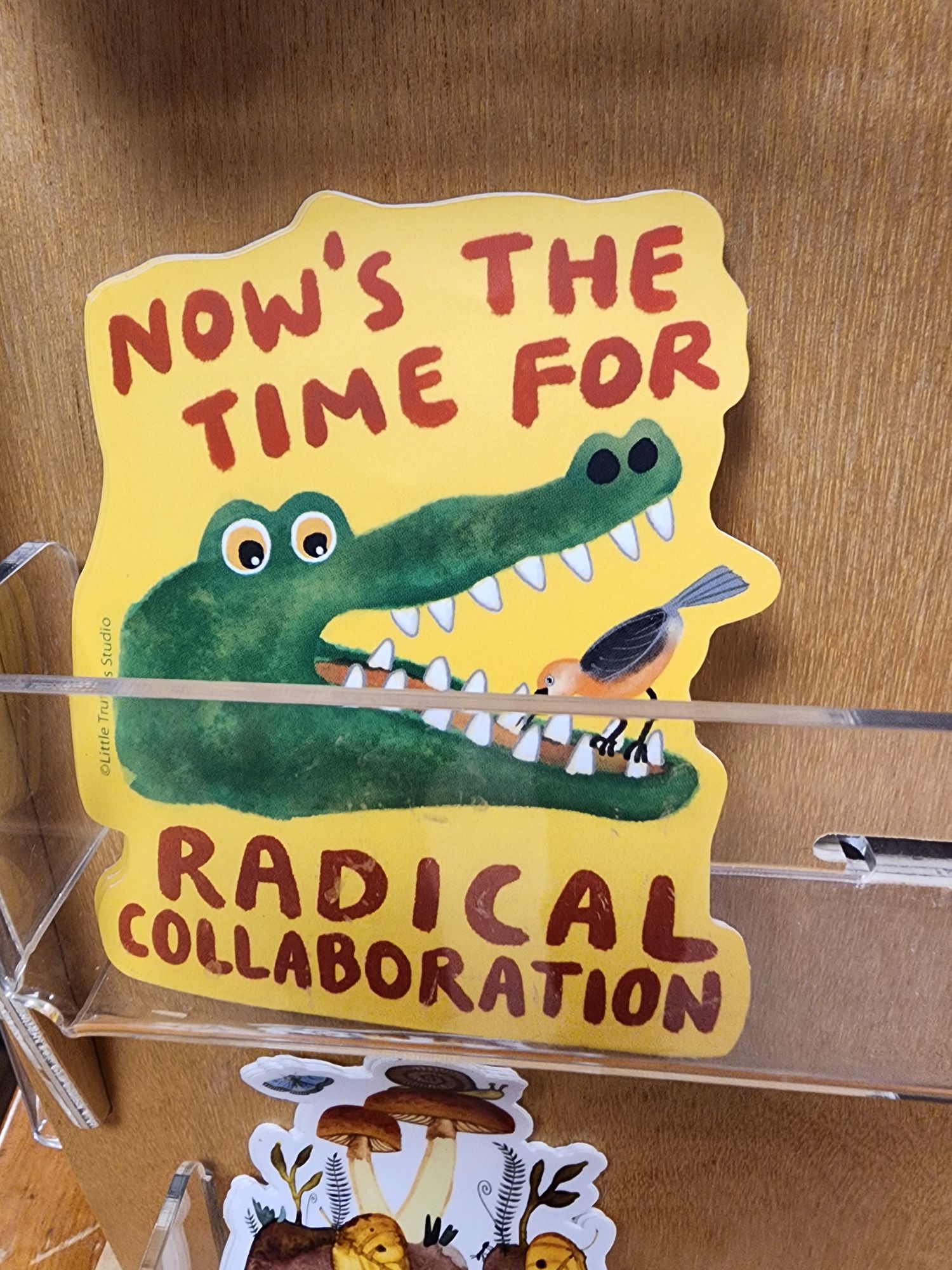
But, what if I said: collaboration can be radical?
“We’ve also had the privilege of experiencing collaborations that not only manage to keep people in the room, but unleash positive energy and creative ideas such that the whole really does become more than the sum of their parts. Such collaborations move beyond quid pro quo approaches and mobilize — and maintain over time — the partners’ contributions of time, energy, resources, knowledge and more to dramatically improve delivery and outcomes… To achieve this level of collaboration, we need ways of working together that go beyond the transactional. We need radical collaboration. But what does that mean? …In our research and practice, we’ve come to see radical collaboration as working together in deeper, more relational ways than transactional approaches. In radical collaborations, the process is the solution. It means being willing to engage in shared decision-making — in some cases, foregoing power and privilege for individual organizations in exchange for arrangements that benefit the whole — and doing so from a sense of abundance and a spirit of our shared humanity. It also requires humility and vulnerability, because conflict and failure are necessarily part of the process. “
— Katherine Milligan and Cynthia Rayner, from their article “What does radical collaboration really mean?”
Aka, we can go deeper than that. Maybe it’s knowing where a poet is coming from when they read their poem about their internal experience and saying so, like one poet thanked Isabella for her vulnerability and confidence after she read her poem “She” from “The Hollows of Bone”, newly edited, after our writing group in late February. Maybe it’s moving beyond writing, taking a walk with another writer and finding out the stories behind the stories. Maybe it’s coming together and mentoring kids in English on a Tuesday, or reading to your nephew or niece after they pick out a book at the library, so they love books and fairy tales and writing as much as you do. Maybe it’s just sharing in our humanity a little and just being together. Like, it’s not necessarily a sense of help as much as it is just sharing experiences and working together for our common good.
This, in turn, builds the trust that is necessary for vulnerability, which leads to transformative new ideas and the very innovation and groundwork that begins the whole process anew. It’s not just collaborating together, it’s laying the foundation for the creative process itself. So, I would encourage you, sit with other writers like you would sit with old friends. Go deeper and find that extra mile you need to take to share an experience or work together with someone. Because, radical collaboration gets to the bones of writing; and, I think we all want to have those “good bones”.
Lately, those “good bones” for me have been coming from digging into writing competitions and participating in Esther Chilton’s weekly writing prompts. I submitted some of my work to the Bellingham Review’s 49th Parallel Award in Poetry and my alma mater’s, Oakland University’s, writing competition as an alumni. And, I wrote a couple poems and some flash fiction for Chilton’s prompts. It’s challenging me and making me participate in a collective whole again. It’s making me a better writer.
But, in the process, I discovered a poet called Anastacia-Reneé (@anastaciarenee5 on Instagram). She is the judge for this year’s Bellingham Review contest. I ran across a YouTube video of her reading to a crowd of people and really loved it. What I loved about it was how she shared her work, owning it, then stepped down and hugged the hostess of the event, showing a deeper connection. I will say that, while I’m pretty sure we have different opinions on things, I really respect her as a poet for doing that, because it shows the radical collaboration I’m talking about here. So, with that, I will leave you with that very video. Because, I think, that’s what we ought to be doing here.
Think about that. ~
Sincerely, Your Author,
Jessica A. McLean





 The Rose